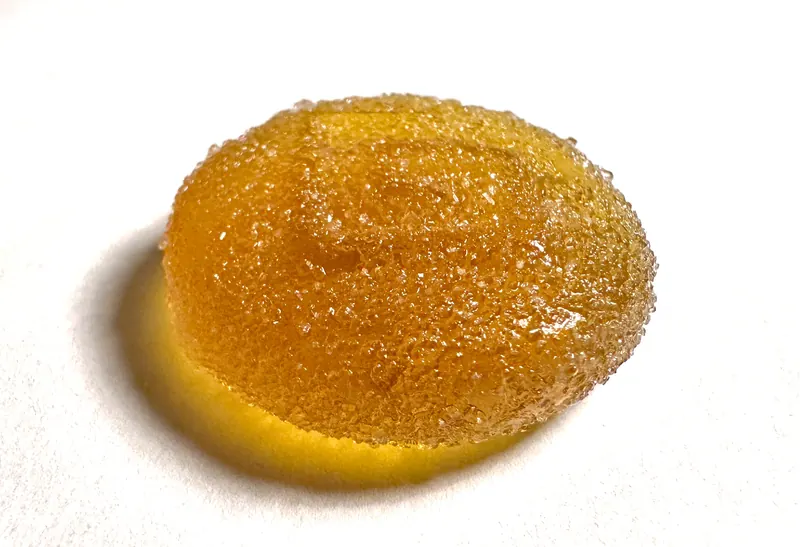

Key points
- In the published tests and warnings we track, most products that were individually reported contained at least one active ingredient that wasn't on the label.
- Gummies labelled with Amanita muscaria often contained tryptamines such as psilocin instead. When labs looked for muscimol, they usually didn't find it.
- Several products contained synthetic tryptamines (4-AcO-DET, 4-AcO-DMT, mipracetin, 4-HO-DET). Some have never been studied in people.
- These are small samples from a few places and years. They show that labels can't be relied on, not how often any one brand is mislabelled.
What are “mushroom gummies”?
The name covers two very different things. Functional mushroom gummies contain mushrooms such as lion’s mane or reishi, which CDC’s investigators describe as not psychogenic (Michienzi et al., 2024). Psychoactive mushroom gummies are sold in smoke shops, gas stations and online with names like “legal psychedelics”, “amanita”, “microdose” or “nootropic blend”, and are meant to make you feel something.
This page is about the second kind. Their labels often name a “proprietary blend” without saying what the active ingredient is. TRE House used “Magic Mushroom Microdose Blend” (CDPH, 2025).
What have lab tests found?
Three published tests or warnings report results product by product. Two more report them in aggregate.
Virginia, 2023: four of six packages had unlabelled psilocybin or psilocin
After a Virginia poison centre treated people who had eaten Amanita-labelled gummies, investigators bought six packages of five brands from gas stations and smoke shops. Four contained psilocybin or psilocin that wasn’t on the label. They also found caffeine, ephedrine, DMT and mitragynine (kratom’s best-known alkaloid), none of them listed (Michienzi et al., 2024). The lab’s instrument couldn’t test for the Amanita compounds the labels claimed.
Portland, 2025: no psilocybin in 12 “magic mushroom” edibles
Oregon State researchers tested 11 gummies and one chocolate. None contained psilocybin, including one gummy labelled “100 mg psilocybin”. Eight contained active ingredients the label didn’t disclose: psilocin, the synthetic tryptamines mipracetin and 4-HO-DET, caffeine, kava, or cannabis extract with Δ9-THC (van Breemen et al., 2025). Three products contained psilocin without psilocybin or its natural precursors. The authors say this suggests synthetic psilocin was added.
Portland, 2025: Amanita labels, tryptamine contents
A separate team tested eight gummies from seven Portland smoke and vape shops. Neither of the two products claiming Amanita muscaria contained muscimol or ibotenic acid. Seven of eight contained psilocin and six contained 4-AcO-DMT. A product labelled psilocybin-free contained psilocybin, and a “nootropic” gummy contained undisclosed THC (Correia et al., 2025). We’ve only read this study’s abstract.
California, 2025: synthetic psychedelics in TRE House products
California’s health department found 4-AcO-DET in every TRE House gummy, chocolate bar and syrup it listed, and 4-AcO-DMT in most. It warned people not to eat them. More than 1,000 pounds of gummies were embargoed and destroyed (CDPH, 2025). See the TRE House record for UPCs.
National, 2024: the Diamond Shruumz outbreak
CDC and FDA linked 180 poisonings in 34 states to Diamond Shruumz products and other mushroom-containing chocolates. 73 people were hospitalised, 29 needed a breathing tube and 2 died (Rumph et al., 2026). Testing of some Diamond Shruumz products found muscimol, psilocin and kavalactones. All of the brand’s products were recalled (FDA, 2024).
Every product row is in the lab results table.
Why do Amanita labels keep turning out wrong?
Amanita muscaria isn’t a controlled substance in the US (Michienzi et al., 2024), and many ‘legal’ gummies name it on the label. In the two US studies that tested Amanita-labelled gummies for muscimol, it wasn’t there (van Breemen et al., 2025) (Correia et al., 2025). Those products contained tryptamines instead, which act on the serotonin system (Correia et al., 2025). Muscimol works differently, on GABA-A receptors (BfR). Muscimol did turn up in some Diamond Shruumz products (Rumph et al., 2026).
FDA has also said Amanita muscaria and its constituents don’t meet the safety standard for use in food, and treats them as unapproved food additives (FDA, 2024). A gummy that really did contain Amanita would still be a problem.
What can’t these tests tell you?
- How common mislabelling is. Researchers chose small numbers of products in Virginia, Oregon and California, at different times. That shows mislabelling happens and can be serious, but not what share of products on the market are affected.
- What’s in the gummy you have. Batches can differ. CDPH’s warning applies to TRE House products regardless of lot number (CDPH, 2025), but most findings describe the packages that were tested.
- Anything the lab didn’t look for. The Virginia lab couldn’t test for muscimol or ibotenic acid (Michienzi et al., 2024).
If you're going to take one anyway
Assume the label may be wrong. California’s health department warned that with these products the risk of overuse and of interactions with other medications is high (CDPH, 2025). Our guide to checking a gummy explains what home tests can and can’t tell you. If someone becomes very unwell, see what to do.
Questions people ask
Do any 'magic mushroom' gummies actually contain psilocybin?
Sometimes, without saying so. Virginia testers found unlabelled psilocybin in a gummy sold as Amanita, and an Oregon study found psilocybin in a gummy labelled psilocybin-free. The one Portland gummy that claimed 100 mg of psilocybin contained none.
Are lion's mane or reishi gummies psychoactive?
CDC's report notes that lion's mane, chaga, reishi, cordyceps, maitake and turkey tail aren't psychogenic. But several products that listed only these mushrooms contained psilocin, THC or synthetic tryptamines, so the label alone doesn't tell you.
If a lab found nothing in a product, is it safe?
Not necessarily. 'Nothing detected' means nothing the lab looked for was found in that sample. Labs can only find what their methods cover, and other batches may differ.
Sources
- van Breemen RB, Simchuk D, Fritzsche B, Huson D, Kuzdzal SA, Ferguson J. Active Constituents of Psilocybin Mushroom Edibles. JAMA Netw Open. 2025;8(9):e2531345.
Tested 12 'magic mushroom' edibles (11 gummies, 1 chocolate) bought at retail shops in Portland, Oregon. None contained psilocybin. Eight contained active ingredients not disclosed on the label: psilocin (3), synthetic tryptamines mipracetin and 4-HO-DET (2), caffeine (1), kava extract (1) and cannabis extract including Δ9-THC (1). Four had no active ingredient detected. Muscimol and muscarine, listed on one label, were not detected in any product.
- Michienzi A, Hamlin J, Farah R, Bazydlo L. Notes from the Field: Schedule I Substances Identified in Nootropic Gummies Containing Amanita muscaria or Other Mushrooms - Charlottesville, Virginia, 2023-2024. MMWR Morb Mortal Wkly Rep. 2024;73(28):628-630.
Blue Ridge Poison Center (Virginia) managed five people evaluated after eating gummies labelled as containing Amanita muscaria (Sept 2023–June 2024), including a 3-year-old who was hospitalised. Investigators bought six packages of five brands from gas stations and smoke shops; four of six contained unlabelled psilocybin or psilocin, with caffeine, ephedrine, mitragynine (kratom) and DMT among other unlabelled findings.
- Correia MS, Gonzaga MJ, Temple C, Gerona RR. Quantitative analysis of recreational psychoactive mushroom gummies in Portland, Oregon. Clin Toxicol (Phila). 2025;63(4):261-266.
Eight gummy products from seven Portland, Oregon smoke and vape shops, analysed by LC-QTOF-MS. Neither ibotenic acid nor muscimol was found in the two products claiming Amanita muscaria; seven of eight contained psilocin and six contained 4-AcO-DMT. One product labelled psilocybin-free tested positive for psilocybin; one 'nootropic' product contained undisclosed Δ9-THC; kavalactones were also detected.
- California Department of Public Health. CDPH Warns Consumers Not to Eat TRE House Brand Magic Mushroom Gummies, Chocolate Bars, and Syrup (NR25-024). December 11, 2025.
CDPH laboratory testing found 4-AcO-DET in all listed TRE House products and 4-AcO-DMT in most. Products were labelled with a 'Magic Mushroom Microdose Blend' and 'Proprietary Nootropic Mushroom Blend'. More than 1,000 lb of gummies were embargoed and destroyed. No illnesses had been reported at the time.
- Rumph JT, Winquist A, Troeschel AN, Pulver S, Schnall AH, Ebersole J, et al.. Severe Illness Associated with Eating Mushroom-Containing Chocolate Products - United States, January-October 2024. MMWR Morb Mortal Wkly Rep. 2026;75(13):179-184.
CDC/FDA investigation of poisonings linked to Diamond Shruumz microdosing chocolate and other mushroom-containing chocolate products, January–October 2024: 180 cases in 34 states, 73 hospitalised, 38 admitted to intensive care, 29 intubated, 2 deaths. Testing of some Diamond Shruumz products found muscimol, psilocin, kavalactones and other substances in some but not all products.
- U.S. Food and Drug Administration. Investigation of Illnesses: Diamond Shruumz-Brand Chocolate Bars, Cones, & Gummies (June 2024). November 15, 2024.
All Diamond Shruumz products were recalled. Reported symptoms included seizures, central nervous system depression, agitation, abnormal heart rates, high or low blood pressure, nausea and vomiting. FDA noted recalled product may still be on some smoke/vape shop shelves. Advises anyone who becomes ill to contact a healthcare provider and/or the Poison Help Line at 1-800-222-1222. Investigation status: ended (last update 2024-11-15).
- U.S. Food and Drug Administration. Letter to Industry on the Use of Amanita muscaria or its Constituents in Food. December 18, 2024.
FDA determined that Amanita muscaria, its extracts, and muscimol, ibotenic acid and muscarine do not meet the GRAS standard and are unapproved food additives when used in conventional food; such food is adulterated and subject to enforcement. FDA reviewed more than 600 publications and serious adverse event reports.
- German Federal Institute for Risk Assessment (BfR). Fly agaric poison: health risks of 'fruit gummies' containing muscimol – children are particularly at risk.
BfR reports poisonings from muscimol gummies reported by German poison centres, including impaired consciousness up to coma, confusion and agitation. Ibotenic acid converts to muscimol on drying and heating; effects usually begin about 30 minutes after eating and generally wear off within 24 hours, longer after large amounts. Children may mistake the products for sweets.