
Key points
- No home test tells you exactly what's in a gummy or how strong it is. The labs in the studies we track used mass spectrometry.
- Ehrlich reagent turns purple with indoles, a chemical family that includes psilocybin and many other tryptamines. A purple result can't tell them apart.
- Muscimol isn't an indole, so a purple Ehrlich result doesn't show you whether it's there.
- Check whether the product or brand is already named in a warning, recall or published test before you rely on a home test.
Can you test a gummy at home?
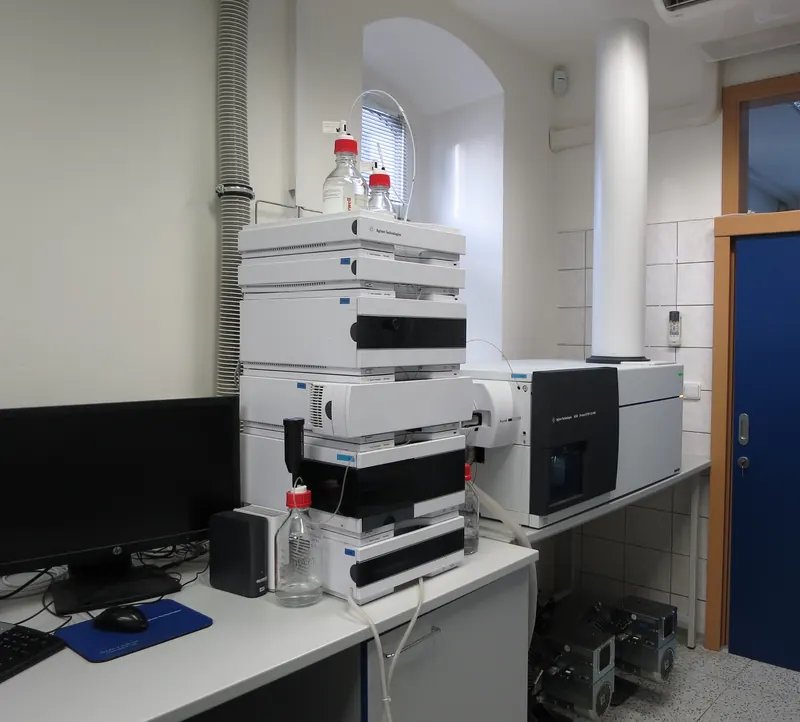
Only partly. Every published test in our lab results table used laboratory mass spectrometry: LC-QTOF, GC-MS or UHPLC-MS/MS (Michienzi et al., 2024) (van Breemen et al., 2025) (Correia et al., 2025). Those instruments identify individual compounds and can measure how much is there. A home kit can’t do either.
What does an Ehrlich test show?
Ehrlich reagent is the home test most often used for mushroom products. DanceSafe, a harm-reduction organisation that sells it, says it turns purple in the presence of indoles, a chemical family that includes LSD, psilocybin and DMT (DanceSafe).
From that, three practical limits follow. These are our reading of how the test works, not separate published findings:
- A purple result doesn’t say which indole. Psilocin, DMT and the synthetic tryptamines found in some gummies (4-AcO-DMT, 4-AcO-DET, mipracetin) are all tryptamines. Tryptamines are indoles, so a purple result can’t tell a gummy with psilocin from one with an unstudied synthetic.
- It doesn’t tell you the dose. A colour change is not a measurement.
- It says nothing about non-indoles. Muscimol, caffeine, ephedrine, kava’s kavalactones and THC aren’t indoles. All of these have turned up undisclosed in tested gummies (Michienzi et al., 2024) (van Breemen et al., 2025).
We also haven’t found published data on how well reagent tests work on gummies, where sugar, colouring and flavouring could get in the way. Treat any result as rough.
What a 'no colour change' result means
It means no indole was detected in the bit you tested. It doesn’t mean the gummy is free of other active ingredients.
What should you check before testing?
- Is the product in a warning or recall? California warned against seven TRE House products by flavour and UPC (CDPH, 2025). FDA recalled every Diamond Shruumz product and noted they may still be on some shop shelves (FDA, 2024). Our brand records list these.
- Has the product been tested? Search the lab results for the brand or a compound on the label.
- What does the label actually disclose? “Proprietary blend” or “nootropic mushroom blend” tells you nothing about the active ingredient. See what that phrase has meant in tested products.
What about a lab test?
Labs that test for psilocybin and psilocin use methods such as GC-MS or LC-MS/MS (Dasgupta, 2017). Whether a lab will accept a sample from the public, which compounds it screens for, and what it costs all vary. We haven’t yet compiled a verified list. If you know of a service that accepts consumer samples, tell us and we’ll check it.
Questions people ask
Can a test kit tell me how many milligrams are in my gummy?
No. Colour reagents show whether some members of a chemical family are present, not how much. Measuring an amount needs laboratory equipment.
Is there a home test for Amanita muscaria or muscimol?
We haven't found a validated home reagent test for muscimol. Ehrlich reagent works on indoles, and muscimol isn't one.
Sources
- DanceSafe. LSD Testing Kit — Ehrlich Reagent + Fentanyl Strip.
States that Ehrlich's reagent turns purple in the presence of indoles, a class that includes LSD, psilocybin and DMT. Listed price $20 when retrieved.
- van Breemen RB, Simchuk D, Fritzsche B, Huson D, Kuzdzal SA, Ferguson J. Active Constituents of Psilocybin Mushroom Edibles. JAMA Netw Open. 2025;8(9):e2531345.
Tested 12 'magic mushroom' edibles (11 gummies, 1 chocolate) bought at retail shops in Portland, Oregon. None contained psilocybin. Eight contained active ingredients not disclosed on the label: psilocin (3), synthetic tryptamines mipracetin and 4-HO-DET (2), caffeine (1), kava extract (1) and cannabis extract including Δ9-THC (1). Four had no active ingredient detected. Muscimol and muscarine, listed on one label, were not detected in any product.
- Michienzi A, Hamlin J, Farah R, Bazydlo L. Notes from the Field: Schedule I Substances Identified in Nootropic Gummies Containing Amanita muscaria or Other Mushrooms - Charlottesville, Virginia, 2023-2024. MMWR Morb Mortal Wkly Rep. 2024;73(28):628-630.
Blue Ridge Poison Center (Virginia) managed five people evaluated after eating gummies labelled as containing Amanita muscaria (Sept 2023–June 2024), including a 3-year-old who was hospitalised. Investigators bought six packages of five brands from gas stations and smoke shops; four of six contained unlabelled psilocybin or psilocin, with caffeine, ephedrine, mitragynine (kratom) and DMT among other unlabelled findings.
- Correia MS, Gonzaga MJ, Temple C, Gerona RR. Quantitative analysis of recreational psychoactive mushroom gummies in Portland, Oregon. Clin Toxicol (Phila). 2025;63(4):261-266.
Eight gummy products from seven Portland, Oregon smoke and vape shops, analysed by LC-QTOF-MS. Neither ibotenic acid nor muscimol was found in the two products claiming Amanita muscaria; seven of eight contained psilocin and six contained 4-AcO-DMT. One product labelled psilocybin-free tested positive for psilocybin; one 'nootropic' product contained undisclosed Δ9-THC; kavalactones were also detected.
- California Department of Public Health. CDPH Warns Consumers Not to Eat TRE House Brand Magic Mushroom Gummies, Chocolate Bars, and Syrup (NR25-024). December 11, 2025.
CDPH laboratory testing found 4-AcO-DET in all listed TRE House products and 4-AcO-DMT in most. Products were labelled with a 'Magic Mushroom Microdose Blend' and 'Proprietary Nootropic Mushroom Blend'. More than 1,000 lb of gummies were embargoed and destroyed. No illnesses had been reported at the time.
- U.S. Food and Drug Administration. Investigation of Illnesses: Diamond Shruumz-Brand Chocolate Bars, Cones, & Gummies (June 2024). November 15, 2024.
All Diamond Shruumz products were recalled. Reported symptoms included seizures, central nervous system depression, agitation, abnormal heart rates, high or low blood pressure, nausea and vomiting. FDA noted recalled product may still be on some smoke/vape shop shelves. Advises anyone who becomes ill to contact a healthcare provider and/or the Poison Help Line at 1-800-222-1222. Investigation status: ended (last update 2024-11-15).
- Dasgupta A. Challenges in Laboratory Detection of Unusual Substance Abuse: Issues with Magic Mushroom, Peyote Cactus, Khat, and Solvent Abuse. Adv Clin Chem. 2017;78:163-186.
Routine urine drug-screening immunoassays target common drugs and may miss less common ones; amphetamine immunoassays have low cross-reactivity with psilocin; confirmation of psilocybin/psilocin needs GC-MS or LC-MS/MS methods.